
Weber County Criminal History Checks
No single screen contains all Weber County criminal records. Begin with the event or status you need to verify. The sheriff roster answers a current or recent county-custody question. Utah Courts XChange searches public district and justice court case information, while MyCase gives an eligible party free access to their own linked case. The clerk supplies certified, archived, or non-digitized court material. An incident narrative stays with the arresting police agency. Utah BCI is the official route for a person's own statewide fingerprint-linked criminal history.
Use a full legal name, aliases, a middle name, a likely date range, and a case, incident, or booking number when one is known. A common name alone is weak proof. Confirm the court, agency, dates, and other lawful identifiers before deciding two entries concern the same person. The Weber County department directory is a sound starting point when the correct county office is not yet clear.
- Define the record layer: custody, police report, court case, statewide self-record, warrant, supervision, or registry.
- Search the matching official system with the most specific name and record identifiers available.
- Read the source warning and check whether the result is current, delayed, unofficial, or limited by law.
- Compare a booking charge with the filed court case rather than treating the intake label as the outcome.
- Ask the custodian for an official or certified copy when accuracy, age, or completeness matters.
Weber County Roster Limits
The sheriff's roster is useful because it accepts a last name, a first name, or both. The result list shows booking time, name parts, gender, age, and a Details link. Yet Weber County expressly calls the web roster unofficial. Its terms say updates occur no more than once per hour and often less often. A missing result does not prove that a person has no arrest history, has never been booked, or has not moved to another form of custody.
The Weber County Sheriff's Office provides the county corrections routes shown here.
The sheriff remains the source for an official Weber County booking record even when the public display is delayed.
| Roster control | How to use it | Limit |
|---|---|---|
| Last Name | Enter a surname alone or with a first name | Not marked as required |
| First Name | Narrow a surname result | Spelling differences can matter |
| Details | Open booking and charge context | Still an unofficial web extract |
| Reset/Clear | Remove name filters | Does not change source coverage |
Note: Call corrections for urgent custody confirmation, and use a GRAMA request when the official booking document is required.
Official Background Checks in Utah
The Utah Department of Public Safety, Bureau of Criminal Identification is the central state repository. For self-review, a person uses BCI's Application for Criminal History with the identity and fingerprint material required by the current form. The subject may direct release to someone else through a notarized Third Party Release. That release is not an open public name-search permission. If an arrest or disposition is wrong, the BCI Record Challenge form is the correction path.
The current BCI Right of Access fee is $20. In-person payment may be made by cash, personal check, Visa, MasterCard, money order, or cashier's check, and current government photo identification is required. A Utah Driving Privilege Card is not accepted. Weber County residents also have a sheriff service for their own Utah history at a posted $15 fee. Call first to verify present procedures.
The official BCI forms library separates the application, release, and challenge routes.
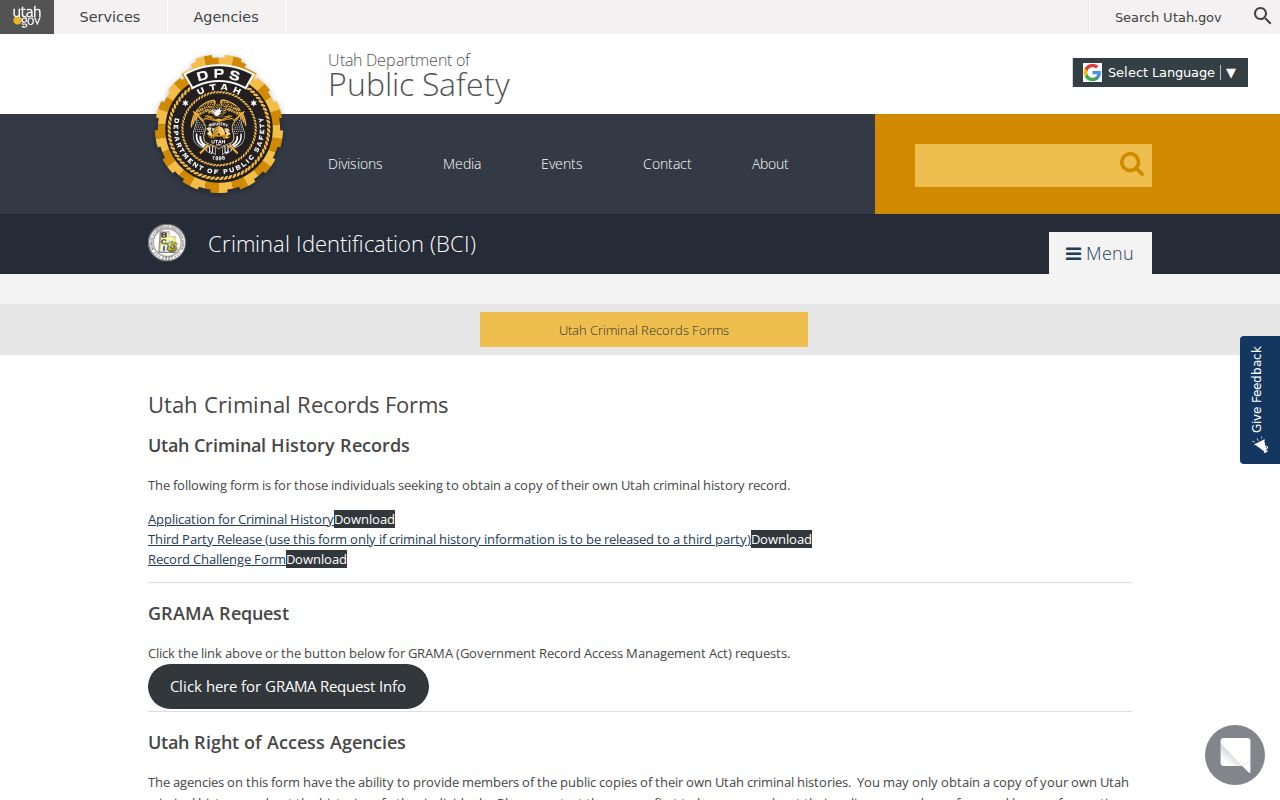
The live form controls its required identity fields, supporting documents, signature, delivery choice, and payment instructions.
| Official service | Current amount | Main purpose |
|---|---|---|
| BCI Right of Access | $20 | A person's own Utah criminal history |
| Weber Sheriff self-record | $15 | Own Utah history for a county resident |
| BCI fingerprint service | $20 for up to three cards | Livescan, digital print, or wet-ink cards by appointment |
| Additional fingerprint card | $5 each | Cards beyond the first three |
Utah BCI Has No Name Search
Public court cases and BCI criminal histories follow different access rules. Weber County residents cannot type another person's name into a general BCI portal. BCI releases a Utah history to the subject or through the subject's designated, notarized release. Court records, jail data, and the public offender registry remain available through their own official channels because they are different records governed by different rules.
The Utah BCI criminal-record access page distinguishes self-record review from a public court search.
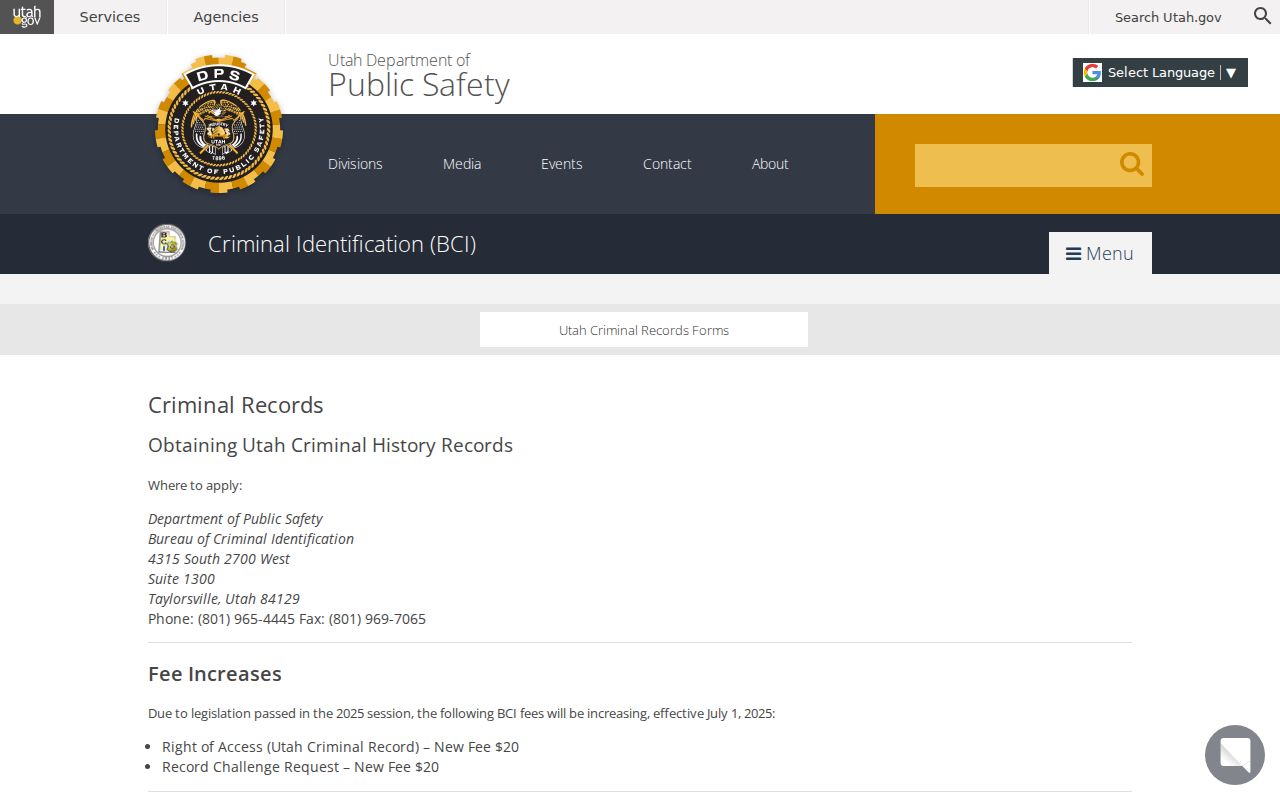
This distinction prevents a Weber County court index from being mistaken for a fingerprint-supported Utah rap sheet.
An FBI Identity History Summary is another subject-only product. It covers fingerprint submissions reported nationally and is not a substitute for the Weber County court file, the sheriff roster, or the BCI Utah record. For a professional license or volunteer role that lawfully requires fingerprints, follow the official program's instructions and authorized channel.
Kinds of Weber County Criminal Records
A criminal event can create several Weber County records at once. The police report explains the agency response. Corrections creates the booking file after delivery to the jail. A prosecutor may later file a complaint or information, and a court clerk builds the docket. BCI receives fingerprint-supported arrest data and reported outcomes. Each product has its own custodian, update cycle, public fields, and restriction rules.
The Utah Bureau of Criminal Identification is the state repository named in that flow.
BCI records connect fingerprint-supported events across Utah, while Weber County offices retain their source documents.
- Incident and arrest report: held by the sheriff, city police, highway patrol, campus police, or other originating agency.
- Booking record: held by Weber Corrections with intake, charge, bail, hold, and custody details.
- Court case file: held by the district or justice court clerk with filings, hearings, pleas, and outcome.
- BCI criminal history: the restricted, fingerprint-linked statewide repository record.
- Custody, supervision, and registry entries: held through county corrections, UDC, the Board, or the Utah registry system.
How Weber County Records Move
A city or county officer first creates the incident and arrest material. If Weber Corrections accepts the person, jail staff record identity, photograph, fingerprints, booking time, intake charges, bail, and holds. Fingerprint-supported arrest data moves through BCI and may reach the FBI. The Weber County Attorney reviews felony and class A submissions, while the proper city or county prosecutor handles lower-level justice matters. Once charges are filed, the clerk maintains court events and reports qualifying dispositions back to BCI.
Local record flow: Arresting agency → Weber booking → prosecutor screening → district or justice court → reported disposition → Utah BCI.
The Weber County Attorney's official page identifies the county prosecution role in this chain.
The filed charge can differ from the jail's intake label after prosecutor screening, so the court disposition controls the resolved case.
Weber County Criminal Records: What They Contain
The fields depend on the record. A BCI rap sheet starts with identity and aliases, then arranges fingerprint-supported arrest cycles and reported dispositions. A court file is centered on a case number and docket. The Weber County booking record centers on one intake and present or released custody. A police report contains the event narrative and investigative detail, subject to GRAMA classification and redaction.
| Name and identifiers | Legal and former names, aliases, date of birth, and state or federal record identifiers where lawfully shown. |
|---|---|
| Arrest and booking | Date, agency, booking reference, intake charges, holds, bail terms, and custody status. |
| Filed charges | Complaint, information, degree or class, statute, amendments, and dismissed counts in the court file. |
| Disposition | Pending status, dismissal, plea, acquittal, or judgment reported for each charge. |
| Sentence | Jail or prison term, probation, fines, restitution, and related court orders where public. |
| Supervision status | County custody, Utah prison, probation, parole, or release information in the proper source. |
- Booking
- County jail intake, not a finding of guilt.
- Docket
- The court's date-ordered list of filings, hearings, and rulings.
- Disposition
- The result of a charge or case, such as dismissal or conviction.
- Bench warrant
- A court warrant often issued after a missed hearing or unmet order.
Three Weber County Court Doors
XChange, MyCase, and the clerk solve different problems. XChange is the paid public index for district and justice court information. One-time guest access takes a $10 deposit, then charges $0.20 per search and $1 per document. The guest session lasts up to 24 hours, loses unused credit when the browser closes, and idles out after 30 minutes. Subscription terms differ. MyCase is free for an eligible party or criminal victim linking their own case. The clerk handles certified copies, recordings, archived files, and items with no purchasable image.
The official Weber County portal supplies the local agency directory used to find the correct clerk or office.
A Weber County search must also identify the right venue. Second District hears felonies, while Ogden, Roy/Weber, North Ogden, and other justice courts keep their own lower-level cases.
For the detailed field and fee walk-through, use the Weber County Court Case Lookup.
Utah Public Access Laws
Utah law separates public records from private, controlled, and protected material. GRAMA supplies the request, fee, timing, classification, denial, and appeal framework for Weber County agencies. It does not make every part of a police or jail file public. Active-investigation detail, protected victim or minor information, medical facts, personal identifiers, sealed cases, and expunged records can remain restricted. BCI dissemination law separately limits access to the statewide criminal-history repository.
Key Utah laws:
Title 63G, Chapter 2 sets the GRAMA access and appeal system.
Section 53-10-108 limits BCI criminal-history dissemination.
Title 77, Chapter 40a governs petition and automatic expungement.
Section 53-29-404 controls public registry information and its misuse warning.
A narrow request helps the custodian find the right file and estimate costs. Ask for a written classification and appeal explanation when access is denied.
Weber County NextRequest Records
The sheriff directs electronic GRAMA requests to Weber County's NextRequest portal. Select the Sheriff department, describe the exact record and date range, include an incident, case, or booking identifier when possible, and upload valid government photo identification when required. Portal messages preserve the request history and fee notice. A city-police report must go to that city even if Weber County later booked the person.
The official Weber County NextRequest portal handles submission and tracking. The request should name the record, agency, subject, event date, desired format, and the requester's relationship when access depends on it.
Posted sheriff fees vary by product. An incident, accident, or police report may be $50; CSI photographs are $35 per case; audio or video needing no redaction is $35 per deputy or vehicle; inmate calls start at $25 for up to 1,000 calls. Staff time for compilation or manipulation can be charged at the lowest-paid qualified employee's rate. Prepayment may be required when an estimate exceeds $50 or past fees remain unpaid.
Restricted, Sealed and Expunged Records
Juvenile matters, protected GRAMA records, victim and minor identifiers, active investigative material, medical details, sealed cases, and expunged arrests or convictions do not belong in an unrestricted public view. A blank public search is therefore not proof that an event never existed. XChange excludes sealed, expunged, and juvenile delinquency cases. Statutory agencies can retain limited access after an expungement order even though the ordinary public or BCI view changes.
Utah defines expunge as sealing or otherwise restricting access to an arrest, investigation, detention, or conviction record. Most adult petition cases begin with a BCI Certificate of Eligibility application. The person then petitions the right Utah court, completes required prosecution notice, obtains the signed order, delivers certified copies as directed, and verifies that custodians processed it. Qualifying traffic matters and automatic Clean Slate cases follow different routes.
Track a Weber County Expungement
Dismissal does not by itself erase every Weber County record. First identify each arrest and case and confirm its outcome. Then review eligibility, waiting periods, excluded offenses, and aggregate limits under Utah law. BCI evaluates the person's total record, including other states and earlier expungements, rather than only the entries already visible in Utah's ordinary system.
The Utah BCI expungement page posts the application receipt date being processed.
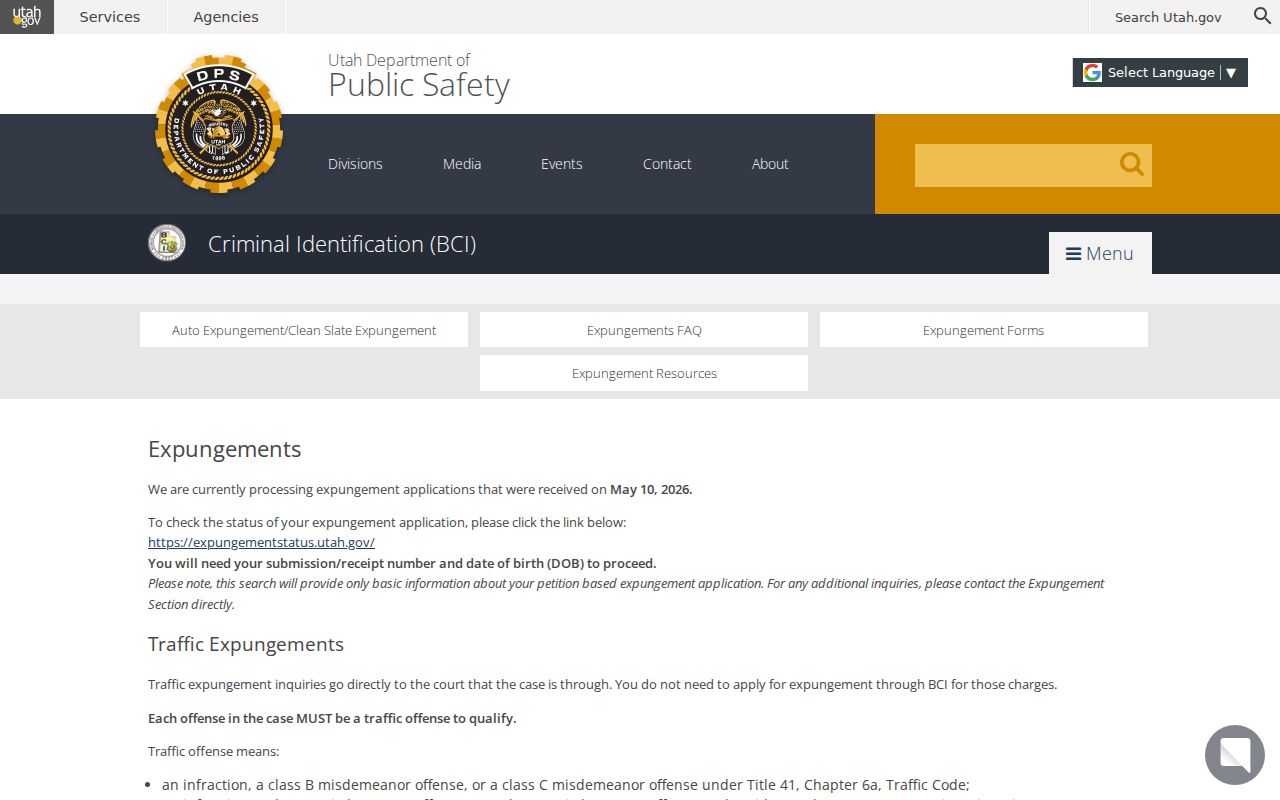
The live processing notice is more useful than a promise of quick completion because it reflects the current queue.
BCI's petition status system uses the submission or receipt number with the applicant's date of birth and returns basic status only. Keep that number. The official expungement status service shows how the tracking step works.
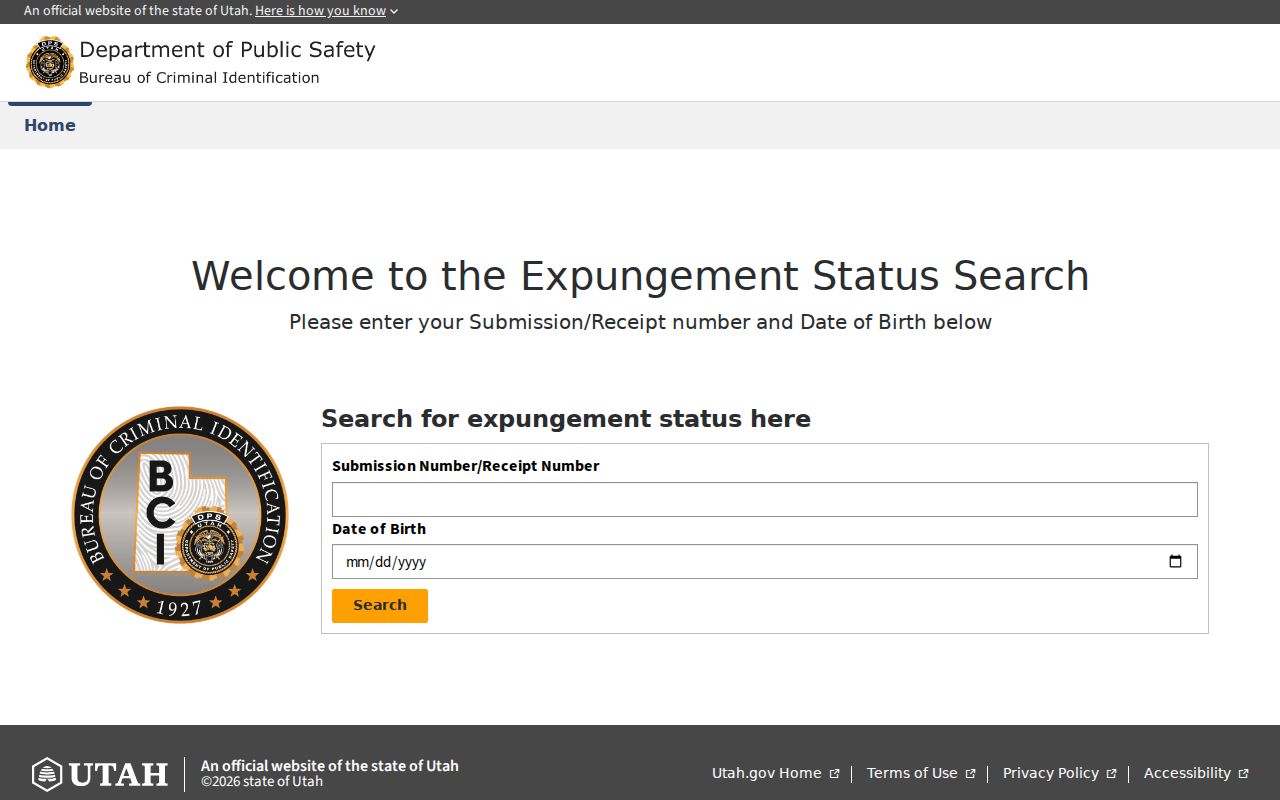
After BCI receives a signed order, it moves charge information into a restricted expungement file and notifies the FBI as described by the agency.
Weber Jail or Utah Corrections
The county roster covers Weber Corrections custody, not every form of confinement or supervision. Reception and Orientation can take up to 72 hours while staff assess behavior, charges, and history. Weber uses six custody levels, with Level 1 the most restrictive. There is no visiting or commissary during that initial period. Once a person transfers to state custody, the county roster can stop being the right place even though the sentence continues.
The Utah Department of Corrections Offender Search is the state prison, probation, and parole layer.
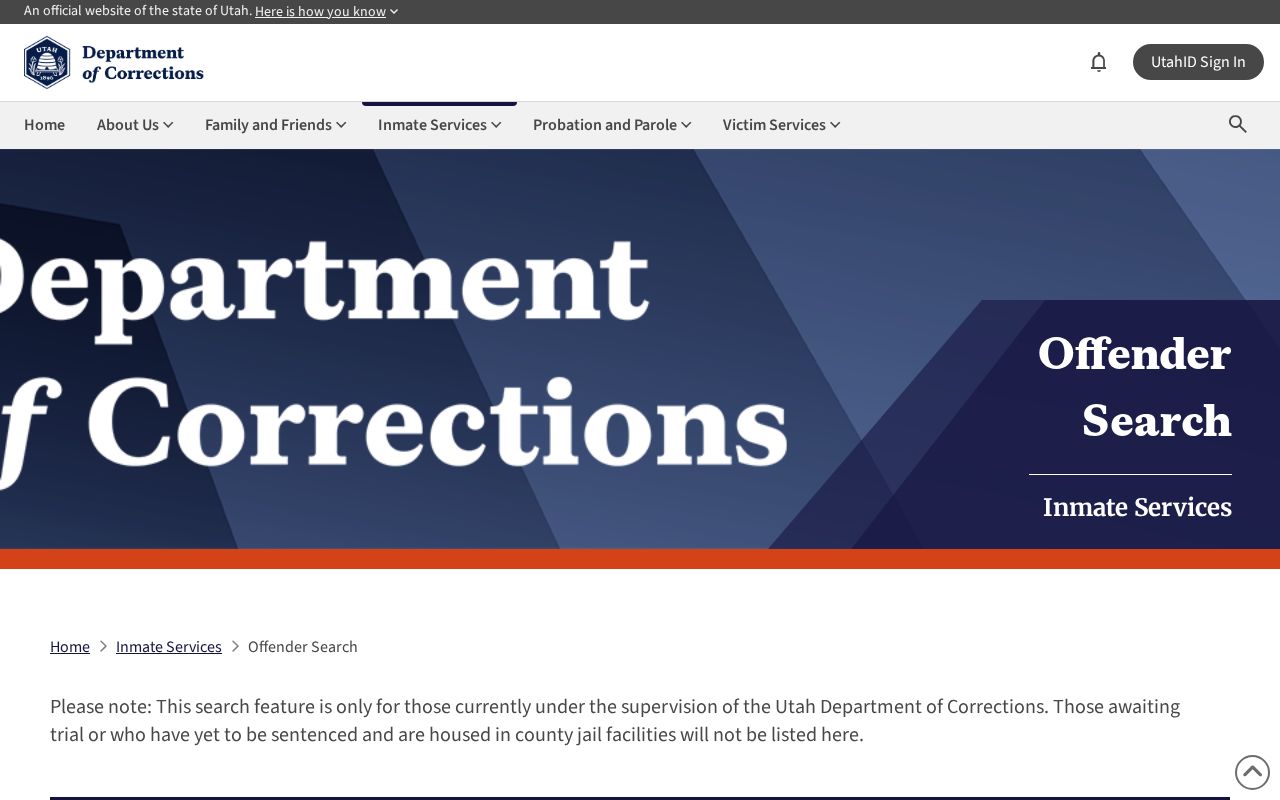
Use the sentencing docket for the court order, UDC for current state status, and the Board of Pardons and Parole for release decisions.
Federal custody is separate again. The U.S. District Court for the District of Utah is the federal court source for Weber County.
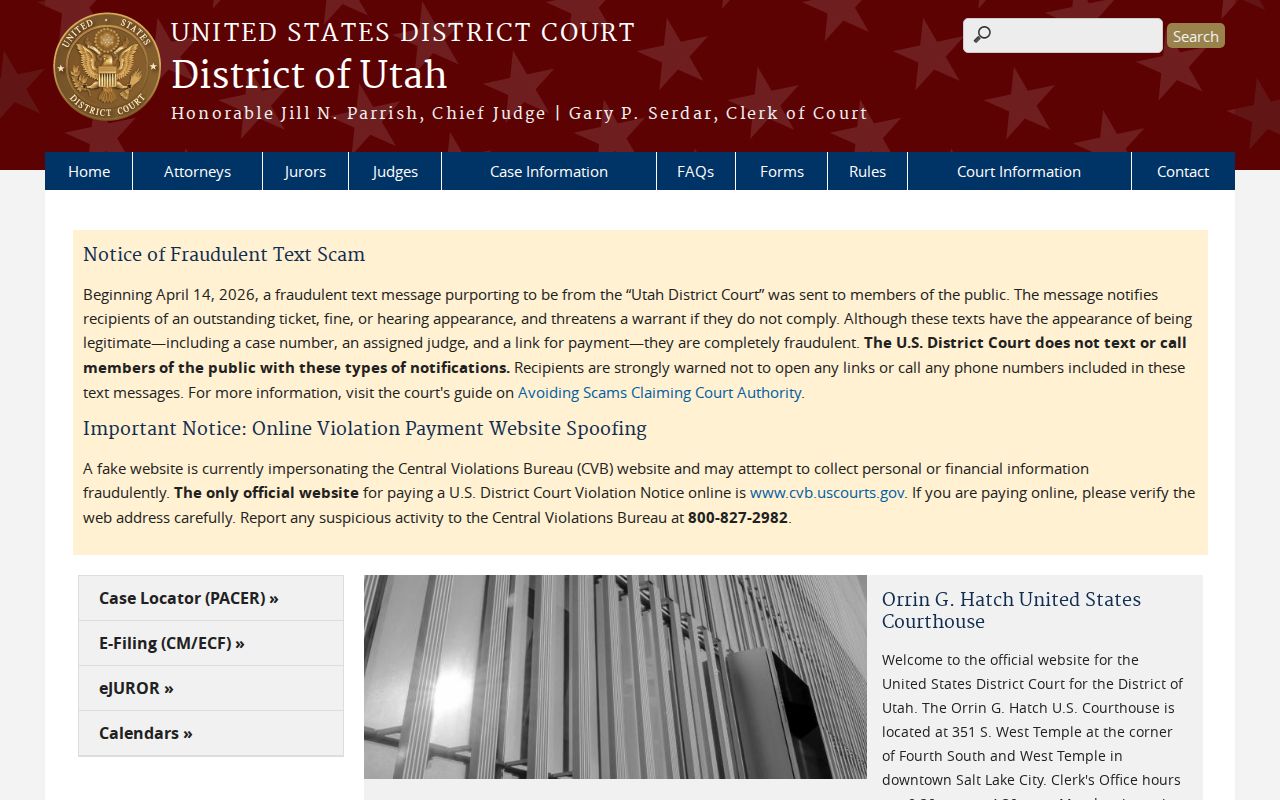
PACER holds federal dockets, while the Federal Bureau of Prisons locator concerns federal prisoners rather than Weber County jail custody.
City-by-City Records in Weber County
Ogden, Roy, and North Ogden are Weber County's three largest incorporated cities. Each police department keeps its own incident narratives. Each justice court retains its own lower-level docket, while the county jail handles a booking after transfer and Second District handles felony matters. The city guides stay at that local level, including exact police request forms, fees, hours, and the municipal court split.
Ogden Record Check
Ogden Police records, Ogden Justice Court, and the county-seat court split.
Roy Record Check
Roy Police GRAMA records and the combined Roy/Weber Justice Court.
North Ogden Record Check
North Ogden police and court forms at the city's shared public-safety address.
Weber County Justice Court Map
Weber County's court geography explains many missed searches. Ogden District Court at 2525 Grant Avenue is the Second District felony counter. Class B and C misdemeanors, ordinances, and infractions can remain at Ogden, Roy/Weber, Riverdale, South Ogden, Harrisville, Farr West, North Ogden, Plain City, or Pleasant View Justice Court. A search narrowed only to a county label can therefore miss the municipal court that owns the file.
The published Weber-Morgan Criminal Justice Coordinating Council plan maps the local prosecutors, public defense, Juvenile Court, and justice courts. It also helps explain why the county seat became the records hub. Weber County runs from the Great Salt Lake shore into the Wasatch Mountains, while the population and justice offices cluster along the Wasatch Front around Ogden's historic rail corridor.
For a warrant, check Utah's official statewide warrant system, the likely issuing court, and the sheriff. Do not confuse a county financial “Warrant Report” with an arrest-warrant list. For a police narrative, return to the arresting agency. For a certified case outcome, return to the clerk. Those custodian checks are the surest way to turn a quick Weber County search into a reliable answer.
Note: A booking allegation, a filed charge, and a final disposition may carry different labels without any source being the same record.