
Weber County Sex Offender Checks
A Weber County sex offender check begins at the Utah Bureau of Criminal Identification offender-registry gateway. Utah's current system is the Sex, Kidnap, and Child Abuse Offender Registry. DPS and BCI administer the statewide gateway, while Weber County law enforcement performs local registration and verification work. The public interface is an official BCI-linked OffenderWatch service. It may require JavaScript, anti-bot clearance, and acceptance of a use disclaimer before a search can proceed.
Use several facts to distinguish a person. Begin with a surname or Weber County postal code, then compare known aliases, the current photograph, physical details, address, vehicles, and registrable offense. A match is a registry record, not a full account of every arrest or court case. A miss is also narrow. It does not establish that a person has no criminal history, that no record exists outside Utah, or that no registration information is held in a law-enforcement-only category.
Weber Registration, Utah Publication
The Weber County role and the state role are related but distinct. Local law enforcement registers and verifies people within its jurisdiction. DPS and BCI operate the public gateway and set the statewide presentation required by Utah law. For local appointment details, contact Weber County Sheriff before arriving. Staff can confirm the place, required identification, documents, and current process. Statewide registry questions may be directed to BCI at 801-495-7700.
The official BCI registry gateway shows where Utah directs public searches. That division of work explains why a Weber County resident may speak with a local officer about registration but search a state-run public system.
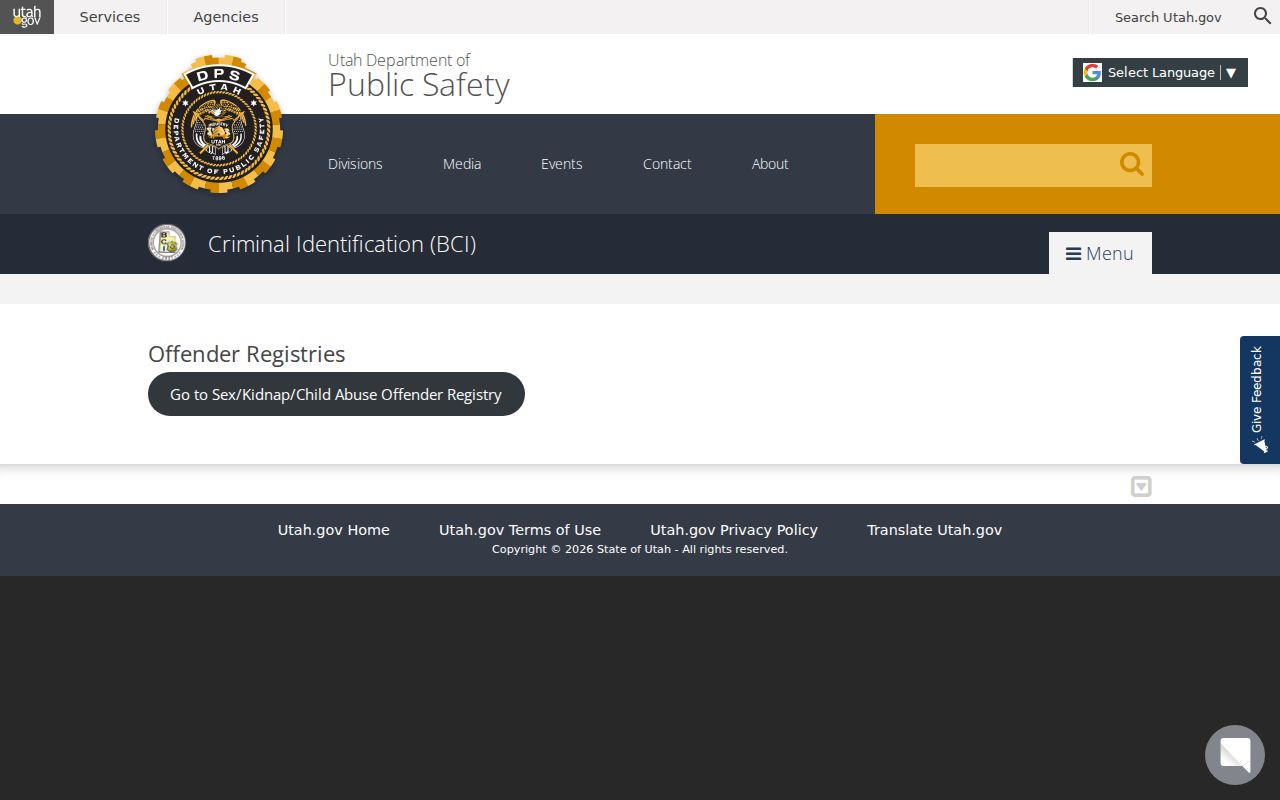
The gateway is the safest starting point because it routes users to Utah's current registry instead of an old statute page or an unrelated commercial list.
Utah Offender Registry Searches
The official interface searches the public subset that Utah law directs DPS to publish. The inspected interface was protected by anti-bot controls, so the fields below come from the current statute rather than guessed screen labels. Section 53-29-404 requires surname and postal-code indexing and permits limited checks of telephone numbers and online identifiers. The latter checks return only whether the submitted value is linked to a registrant. They do not reveal the registrant's identity.
- Open Utah's official BCI gateway, continue to OffenderWatch, and read and accept the conditions of use.
- Search by surname or postal code. Use the phone or online-identifier controls only for the limited yes-or-no linkage purpose described by law.
- Review possible matches with more than a name. Compare aliases, photograph, physical description, jurisdiction, vehicles, and address data.
- Open the full profile, read the offense and registration information, and contact the responsible agency if a material field appears wrong.
| Field Label | Type | Required | Notes |
|---|---|---|---|
| Surname | Text or index | Search option | Required as an index by Utah Code §53-29-404 |
| Postal code | Text or index | Search option | Use a Weber County ZIP code for area-based results |
| Telephone number or designation | Text | Optional | Returns linkage only, without identifying the offender |
| Online identifier or address | Text | Optional | Returns a yes-or-no linkage result only |
| Website address and identifier | Text pair | Optional | Both values are used for the limited linkage check |
The official Utah OffenderWatch interface may pause at a disclaimer or browser check before showing search controls. That step protects access but can make a direct bookmark seem unresponsive.
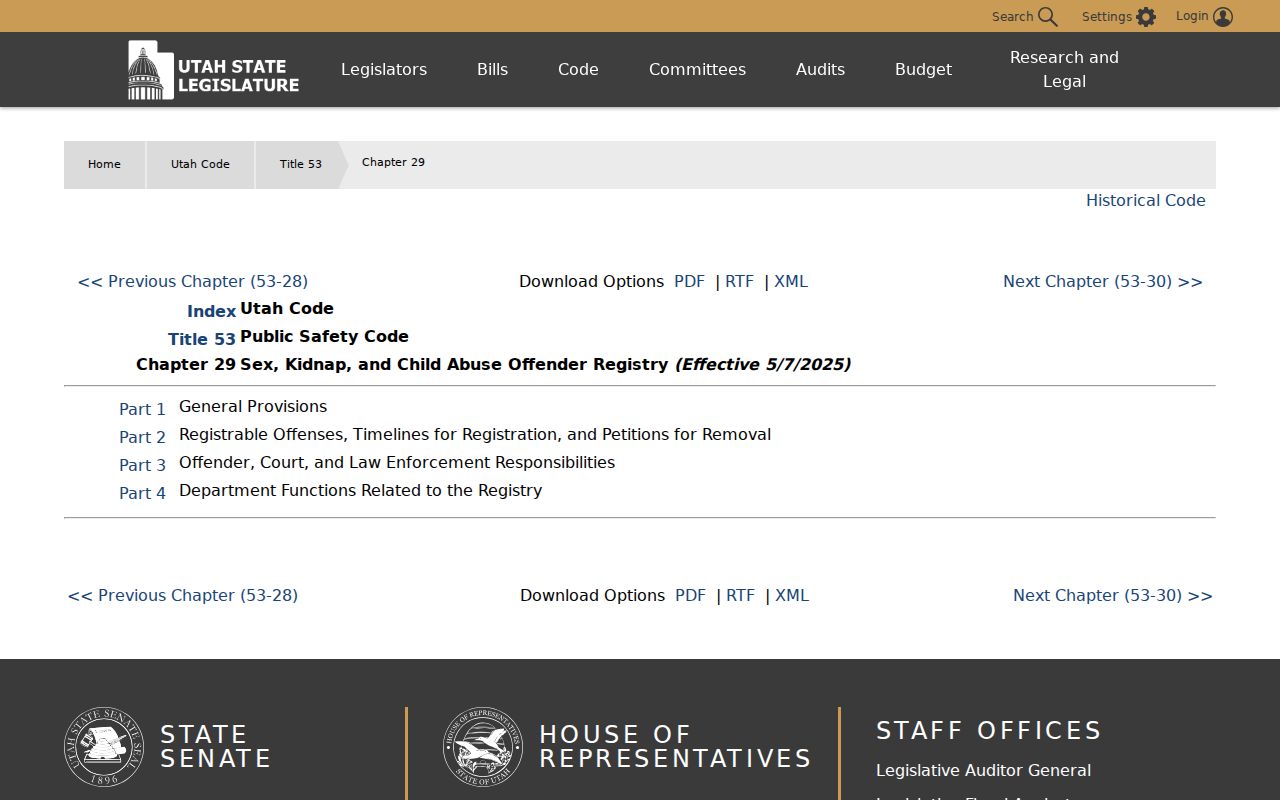
When the vendor screen will not load, return through BCI's gateway and make sure scripts are enabled before treating the failure as a lack of records.
Weber Registry and NSOPW Compared
Utah's registry is the primary source for Weber County details. The Department of Justice National Sex Offender Public Website, or NSOPW, is the cross-state layer. It is most useful when a person may have moved, used an alias, or registered in another participating jurisdiction. NSOPW does not replace the originating jurisdiction. The state or tribal registry still controls the record, update schedule, fields, and correction process.
- Utah registry
- Best for Weber County names, ZIP searches, profiles, and Utah registration data. It is not a national search or full criminal history.
- NSOPW
- Searches participating state, territorial, and tribal registries, but each jurisdiction controls its own source data.
- Weber law enforcement
- Handles the local registration process and suspected noncompliance reports. It is not permission to confront anyone.
The national search page illustrates the broader route available through NSOPW.
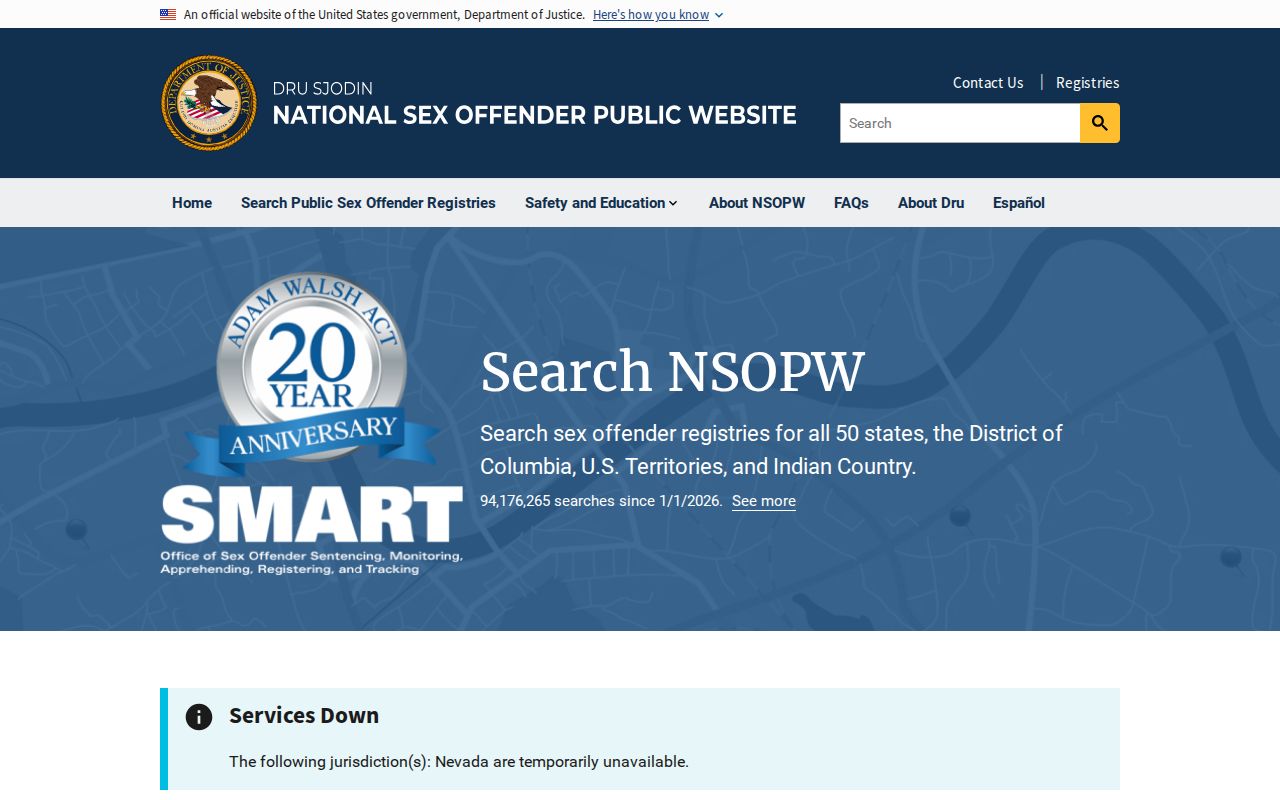
Run both searches when cross-state movement is plausible, then verify details with the jurisdiction named on the profile.
Registry Profiles: What They Show
A Weber County registry profile is built around identity, location, vehicles, and the offense that created the duty to register. Current Utah law specifies a broad public inventory. It also draws firm boundaries. Victim-identifying information must be redacted. Online identifiers are not displayed as profile identity fields, and a search of an identifier yields only a linkage response. Utah law does not require a public SORNA tier or risk score.
| Names and Aliases | All known names and aliases, except online identifiers |
|---|---|
| Photo and Description | Current photograph, date of birth, height, weight, eye color, hair color, and other physical identifiers |
| Residence Information | Primary, secondary, and temporary residence addresses |
| Vehicles | Make, model, color, year, and plate for vehicles owned or regularly driven |
| Work, School, and Service | Professional licenses, Utah schools where employed or enrolled, and volunteer locations |
| Registrable Offenses | Each offense that Utah law requires the profile to publish |
| Protected Information | Victim identity is redacted; online identifiers do not reveal the linked offender's identity |
Read the profile as a set. A common name alone is weak. A photograph can age, an address can change, and a vehicle may be shared. Multiple matching details provide a sounder identification, but any apparent error should go to the registry agency for review.
Weber Registry Search Misses
No result has a narrow meaning. The search did not return a matching public Utah registry profile under the terms entered. It does not prove that the person has no criminal record, has never been arrested, or has no record in another state. It may also reflect spelling, an alias, an old location, a participating jurisdiction's update schedule, or information that Utah law does not publish.
Try a known alias and another relevant postal code, then check NSOPW if interstate movement is possible. Do not broaden the conclusion beyond the tool. For an authorized review of one's own Utah criminal history, BCI uses a separate subject-access process, not the registry.
Reading Weber Registry Profiles Safely
An address pin is information, not an invitation. Do not visit, photograph, follow, message, or confront a person at a listed residence. For community awareness, compare the profile photograph and aliases, read the offense and status language, note the jurisdiction responsible for the entry, and keep the information within lawful safety planning. If a field seems stale, contact the registry office rather than trying to correct it through personal contact.
Compliance language is also limited. It reports the status recorded by the registry at that time. It does not grade future risk, decide guilt in a new matter, or describe every fact of the underlying court case. Likewise, no search result is not a universal safety clearance. Some data can be nonpublic, another jurisdiction may hold the record, and public systems can depend on information supplied through the registration process.
Note: Use a profile to inform safe choices, then let the responsible law-enforcement agency handle verification, errors, or suspected violations.
Utah Registry Levels and Duties
Utah does not publish a simple Tier I, Tier II, or Tier III framework for readers to calculate at home. Section 53-29-203 uses offense-based rules. An enumerated offense ordinarily leads to a ten-year duty measured after the sentence terminates or to lifetime registration. That is not ten years from conviction. External-jurisdiction rules, some under-21 exceptions, extensions, and petition-based early removal can alter the result.
| Utah Framework | Duration | Public Meaning |
|---|---|---|
| Enumerated ten-year offenses | Ordinarily ten years after the sentence terminates | Confirm the actual offense, sentence end, and current statutory rule |
| Enumerated lifetime offenses | Lifetime unless a statute-authorized change applies | Do not infer duration from a broad offense label alone |
| Special cases | Depends on external-jurisdiction rules, age-based exceptions, extensions, or court relief | Use the official statute and profile end date |
The current Title 53, Chapter 29 controls. Older web pages that cite repealed Title 77, Chapter 41 are out of date. A Weber County searcher should rely on the current profile end date and the agency's record, not convert the offense into a homemade federal tier.
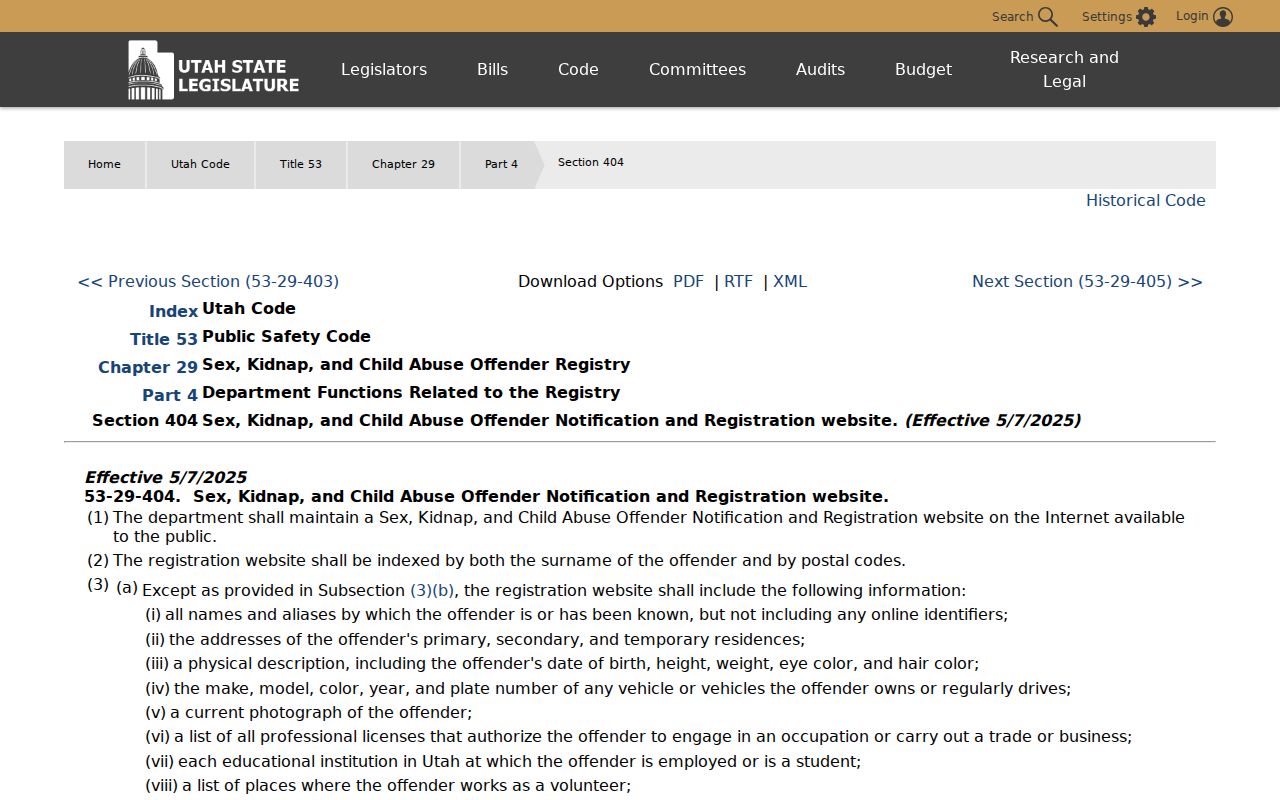
The statute view makes the public fields and legal limits traceable to current Utah law rather than to a third-party summary.
Report Weber Registry Concerns
Suspected noncompliance belongs with law enforcement. Save the profile URL or identifying details, note the conduct or inconsistency observed, and contact the agency responsible for the Weber County registration. Do not investigate the residence yourself. For an apparent statewide data issue, use the BCI registry gateway and the statewide registry number. For an urgent threat or crime in progress, use the appropriate emergency channel.
A reporting caller should separate a data concern from a suspected offense. An old photograph, a misspelled alias, or an address that appears stale may be an update question. A threat, stalking event, or other immediate safety issue is different. The agency decides what it can verify and whether action is warranted. NSOPW questions still return to the jurisdiction that supplied the listing because the national site does not edit Utah's source record.
Weber County Sheriff
1400 South Depot Drive
Ogden, UT 84404
801-778-6600
Call before appearing to confirm the correct registration unit, appointment process, identification, and required documents.
Utah BCI Registry
Statewide registry questions
801-495-7700
Use BCI for gateway and statewide registry questions; use local law enforcement for suspected Weber County noncompliance.
Using Weber Registry Information Lawfully
Public access serves awareness and safety. It does not authorize punishment, harassment, threats, stalking, or vigilantism. Utah requires the registry to warn users that the data comes from offenders and may not be accurate or complete. The warning also requires affirmative agreement before access. Treat a Weber County profile as government-published registry information with stated limits, not as permission to act against a registrant or family member.
The current public-registry law, Utah Code §53-29-404, specifies the published fields, nonpublication rules, and mandatory warning. It is the right citation for lawful use. Former Title 77, Chapter 41 was repealed in 2024 and should not be used as the current authority.
Registry misuse may be a crime: Utah Code §53-29-404 prohibits using registry information to harass or threaten an offender or family member and warns that stalking or threats may lead to criminal prosecution.